AI economics · 7 min read
The Cheapest Model Can Make Your AI Workflow More Expensive
Compare AI costs per completed task, including retries, review effort, latency, and caching boundaries.
The saving that moved into somebody else's calendar
Imagine a support team processing a daily queue with an AI assistant. The assistant classifies each ticket and drafts a response for a reviewer. The engineering team spots a cheaper model and runs a quick comparison. The drafts look reasonable, so they switch.
The token bill drops. The change goes into the weekly update as a cost reduction.
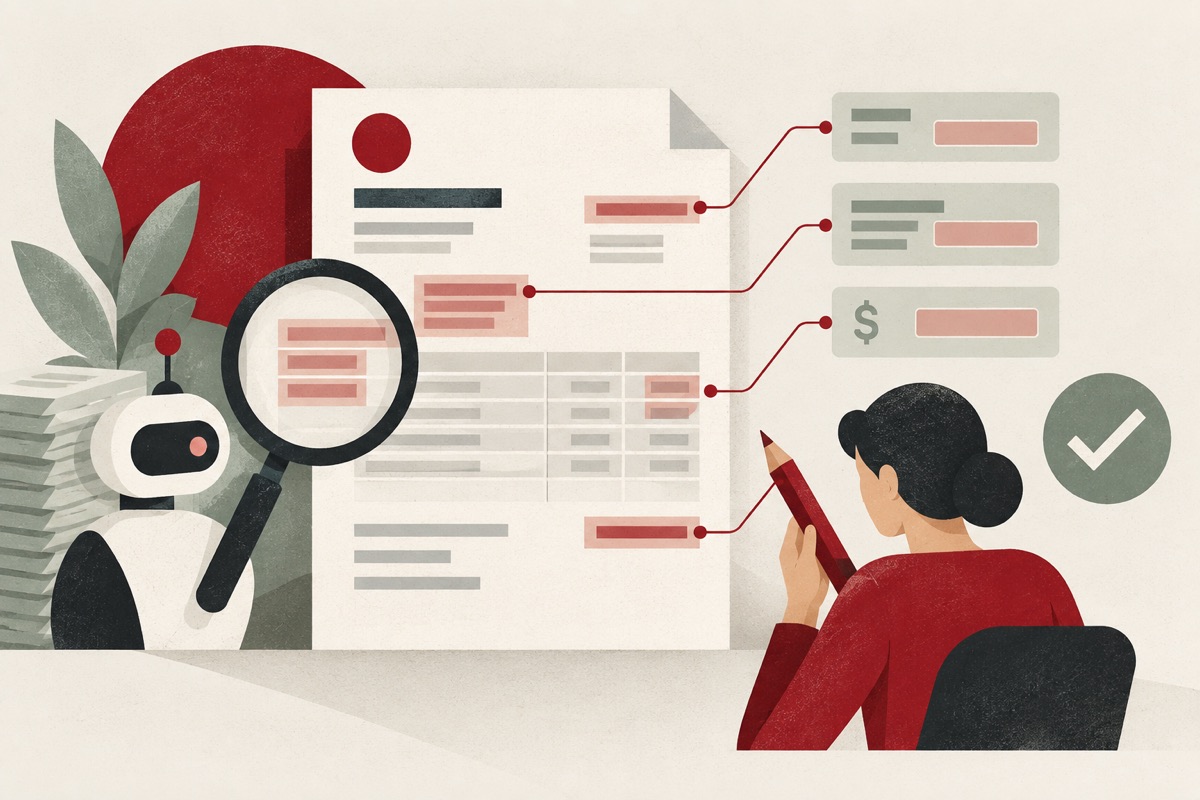
Two weeks later, a reviewer asks why she now spends her mornings correcting product names, reopening classifications, and checking policy references. Nothing is catastrophically wrong. Each draft is just a little less dependable, and she can no longer skim the easy cases confidently.
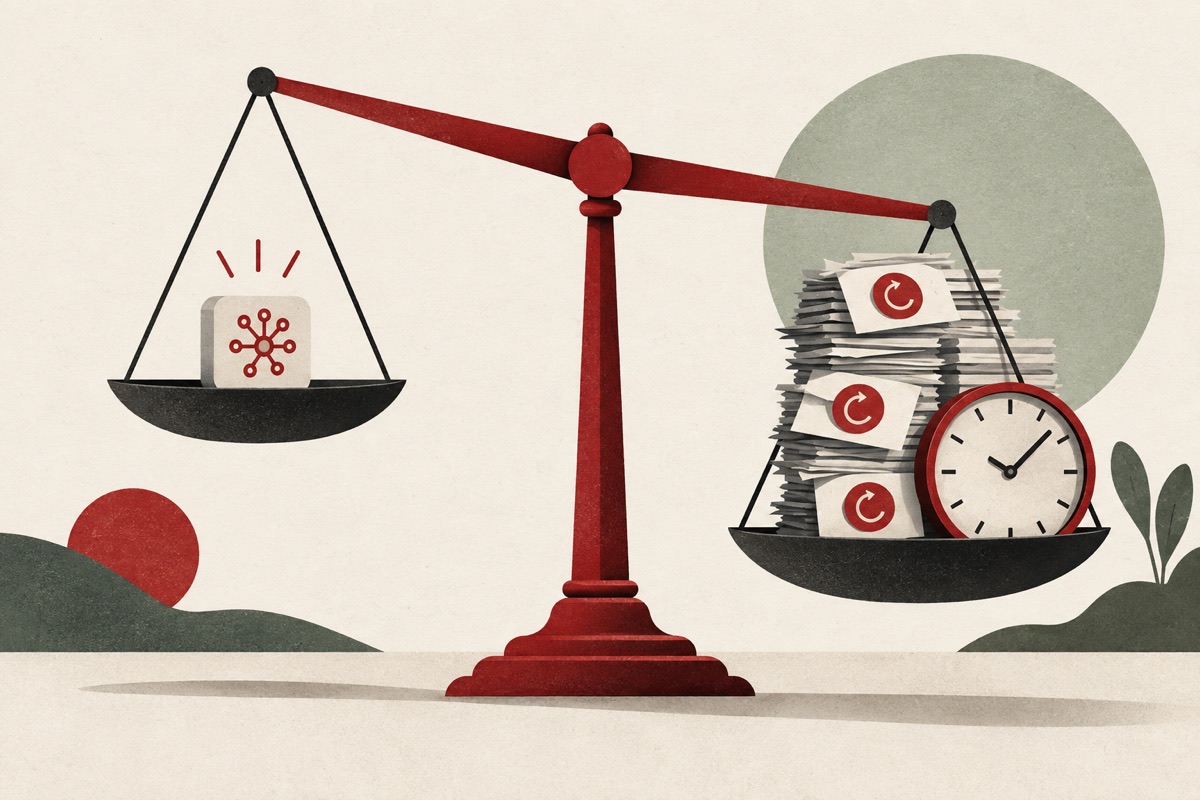
This is a fictional cost investigation, not an account of measured savings or losses at a company. It illustrates a problem that token-level accounting cannot answer: did the workflow become less expensive, or did it move work to a person whose time is not on the model invoice?
I would bring the reviewer into the investigation before changing another model setting. Ask her to walk through three tickets: one she accepts, one she lightly edits, and one she starts over. Watch which uncertainty forces her to leave the review screen and check another system.
The interesting unit is not the model response. It is the completed ticket that meets the team's quality standard. Once you define that unit, model selection becomes an engineering experiment rather than a contest to find the smallest number on a pricing page.
Count the whole path
Track model calls, retrieval calls, retries, tool execution, and human review. Include the tasks that fail or get abandoned. Dividing only by successful first attempts gives a flattering number that does not describe the business.
For illustration, suppose one configuration costs $0.02 per attempt and needs two attempts on average. Another costs $0.05 and usually completes in one. Before review, the first still looks cheaper. If it adds one minute of reviewer time per ticket, the conclusion may reverse.
Those numbers are hypothetical, not current provider prices. Replace them with your invoices and measured review time. The point is the denominator: useful work completed to an agreed standard.
Route by task, not by optimism
A simple classifier may be a good fit for a smaller model. A disputed account history requiring several sources may justify a stronger one. Use an evaluation set to establish that distinction.
Do not use the model's confident tone as the routing signal. A confident wrong answer can be cheaper and worse at the same time. Prefer observable conditions such as missing fields, conflicting evidence, failed validation, or an out-of-distribution request.
Escalation needs a limit. A cheap model that repeatedly retries before calling an expensive model can combine the cost of both with the latency of a queue.
Following one ticket through the cheaper path
Take a ticket asking whether a replacement accessory fits an older device. The cheaper model drafts a confident yes. The reviewer opens the product catalog, discovers that compatibility depends on the revision, and sends the ticket back for clarification.
The assistant runs again after the customer replies. It now has more conversation history and needs another product lookup. The second draft is acceptable, but the original saving has paid for extra calls, another review pass, and a delay for the customer.
That does not prove the cheaper model is a bad choice. It reveals a class of tasks where the current configuration is weak. A plain delivery-status lookup may still be an excellent fit. Compatibility questions may need better retrieval, a stricter validator, a stronger model, or a tool that returns supported combinations directly.
I would label those task classes and compare configurations within each one. An overall average can hide a useful routing opportunity. It can also hide a very expensive minority of cases that loop repeatedly.
Then I would inspect the prompt packet. Perhaps every ticket includes the entire product catalog and a long list of unrelated tools. Fixing that can reduce both cost and distraction without downgrading the model. Or perhaps the product lookup returns an incomplete record, forcing the model to guess. A stronger model may conceal that integration problem during testing without truly solving it.
The lesson of following one ticket is that cost has a causal path. You can often point to the exact missing fact or unnecessary retry that made the task expensive. That is a better optimization target than the model name alone.
Reduce avoidable work before swapping models
Inspect what the system sends on each turn. Repeated tool descriptions, irrelevant documents, and duplicated conversation history can add cost without adding useful evidence.
Bound retrieval results and return compact tool outputs. Keep durable records outside the prompt, then retrieve what the current step needs. Anthropic's context-engineering guidance is useful background for treating context as something to select deliberately.
This is not permission to remove important facts. If a shorter packet drops a customer commitment or a policy exception, you have traded correctness for a smaller request.
Cache with an expiry and an owner
A product-description summary may be reusable. A personalized account answer usually needs more care. Define what makes two requests equivalent before introducing caching.
Include tenant and access scope where relevant. Tie results to source versions or a defensible freshness window. Never serve one customer's answer to another because their questions happen to look similar.
Measure cache usefulness, including stale answers and invalidations. A high hit rate is not an achievement if people receive yesterday's inventory or a policy they are not entitled to see.
Make budgets visible to the workflow
Set a maximum number of attempts, a time budget, and a cost ceiling appropriate to the task. Define what happens when a limit is reached: a partial answer with its limits, a queued review, or a retry at a later time.
The user should not stare at an endless spinner while the agent spends money exploring the same dead end. Show meaningful progress based on completed work, not decorative “thinking” messages.
I would compare configurations on cost per accepted ticket, completion rate, reviewer time, and tail latency. Then choose the least expensive configuration that meets the quality requirement. A cheaper call is a useful ingredient. It is not the same thing as a cheaper product.
A dashboard the reviewer would recognize
After the investigation, I would want a small set of measures that line up with the team's work: accepted tickets, review minutes, rework rate, unresolved tickets, and total workflow cost. Break them down by task class and configuration.
The goal is not to build an elaborate financial model before shipping a pilot. A simple sample with careful definitions is more useful than a polished chart whose denominator changes every week. Include abandoned tasks and escalations so the system cannot look cheaper by failing early.
For the next rollout, keep the old path available. Send a bounded share of suitable tasks through the new configuration, compare the outcomes, and expand only when the evidence supports it. If reviewer time rises, that is a product signal, not an inconvenience to exclude from the experiment.
There are legitimate reasons to pay more for a request. A clearer first answer can save a second customer interaction. A stronger planner can avoid several tool calls. A more reliable output can make the review process predictable. There are also legitimate reasons to use a smaller model when the task is narrow and well supported by data.
The reviewer in our story does not care which model won a benchmark. She cares whether she can trust the next draft enough to finish her queue. A good cost decision should make sense from her chair as well as from the billing dashboard.
Sources & further reading
Worked scenarios are illustrative. Technical references were checked on September 10, 2026.
Working through a similar problem?
Tell me what you are building and where it gets stuck.
Let’s talk ↗